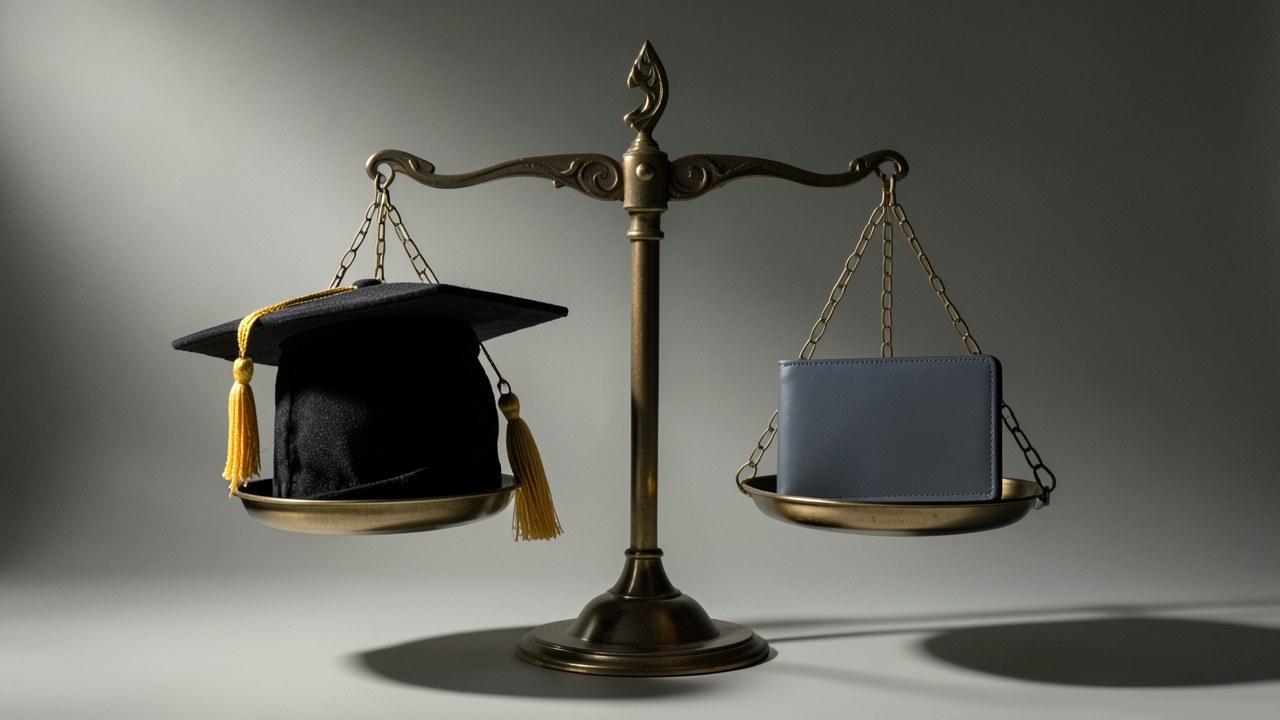
Key Differences at a Glance
Private student loans are specifically designed for education expenses, while personal loans are general-purpose loans that often come with restrictions on using them for postsecondary education. Understanding these differences is essential before you apply.
The table below compares the main features of private student loans and personal loans based on typical lender offerings.
| Feature | Private Student Loan | Personal Loan |
|---|---|---|
| Purpose restriction | Must be used for education expenses | Typically cannot be used for postsecondary education (lender-dependent) |
| Interest rate type | Fixed or variable | Usually fixed, sometimes variable |
| Typical APR range | Approximately 1.94% to 17.99% (fixed, in Credible marketplace) | Approximately 6.24% to 35.99% (in Credible marketplace) |
| Grace period | Varies by lender; some offer 6-month grace or in-school deferment | None; payments typically start immediately |
| Repayment term | Typically 5 to 20 years | Typically 1 to 7 years |
| Borrower protections | Limited, but some lenders offer deferment, forbearance, or discharge for death/disability | Few or none; typically no deferment, forbearance, or forgiveness |
| Credit check required | Yes | Yes |
| Forgiveness programs | Not typically available; federal loans offer some | No forgiveness programs |
| Interest tax-deductible | Possibly not; depends on lender and loan | No |
Can You Use a Personal Loan for Education? Lender Policies
The short answer is: it depends on the lender. Many personal loan lenders explicitly state that funds cannot be used for postsecondary education, while others may allow it under certain circumstances. Lenders that do allow it may have different terms or require the loan to be repaid immediately, as there is no education-specific deferment.
Consumer guides note that using a personal loan for education can be costly because personal loans often carry higher interest rates and shorter repayment terms than student loans.
Before you consider a personal loan for tuition, always check the lender's terms and conditions. Some lenders prohibit the use of funds for education, and using the loan for a prohibited purpose could be considered a violation of your loan agreement.
- Some personal lenders allow education-related expenses, but many do not.
- Even if a lender allows it, you may miss out on student-loan-specific benefits like deferment and income-driven repayment.
- If a lender prohibits education use and you use the funds for that purpose, it could be a breach of contract with potential financial consequences.
Sources: Broadview Federal Credit Union, Credible
Interest Rates and Fees Compared
Rates and fees change over time; the figures cited here are for the 2026-27 academic year and may not reflect current offers.
Sources: University of Illinois Office of Student Financial Aid, Credible
Repayment Flexibility and Hardship Options
Repayment flexibility is a significant advantage of federal student loans. They offer a standard 10-year term, but you can also choose extended or income-driven repayment plans that can stretch payments over 20 to 25 years and base the monthly amount on your income. Private student loans generally have fixed terms of 5 to 20 years, but they may offer in-school deferment or a grace period before payments begin.
Personal loans, by contrast, typically have terms of 1 to 7 years, and payments usually start immediately after the loan is funded. There is generally no grace period or income-based repayment option.
If you face a financial hardship, federal loans offer deferment and forbearance, and you may even qualify for income-driven repayment adjustments. Private student lenders may offer some forbearance options, but these are not guaranteed and vary by lender. Personal lenders rarely offer any hardship relief beyond a temporary forbearance, and it is discretionary.
- Federal student loans: income-driven repayment, 10–25 year terms, grace period typically 6 months after leaving school
- Private student loans: 5–20 year terms; some offer in-school deferment or a short grace period
- Personal loans: 1–7 year terms; no grace period; payments start immediately
Sources: University of Illinois Office of Student Financial Aid, Broadview Federal Credit Union, Credible
Borrower Protections: Deferment, Forbearance, and Forgiveness
Federal student loans come with a suite of borrower protections that are rarely available on private loans or personal loans. These include deferment (for example, while you return to school) and forbearance, as well as loan forgiveness programs such as Public Service Loan Forgiveness for qualifying public service employment.
Private student loans have fewer protections, but some lenders offer forbearance or discharge for death or disability, though terms vary by lender.
Personal loans typically offer little to no borrower protection. They do not offer student-loan-style deferment or forbearance, and they never include loan forgiveness programs.
- Federal loans: income-driven repayment, deferment, forbearance, forgiveness for public service
- Private student loans: limited protections – check with your lender for hardship options
- Personal loans: no standard deferment, forbearance, or forgiveness
Sources: University of Illinois Office of Student Financial Aid, Broadview Federal Credit Union
Credit Requirements
Credit requirements differ sharply between federal and private student loans and personal loans. Federal student loans for undergraduate students generally do not require a credit check (with the exception of PLUS loans). This makes them accessible even if you have limited or no credit history.
Private student loans and personal loans both require a credit check, and if you have limited credit, you will likely need a creditworthy cosigner to qualify for a private student loan or perhaps a personal loan. Your income and existing debt also affect your ability to get approved and your interest rate.
- Federal student loans: no credit check for most undergraduate loans
- Private student loans: credit check required; cosigner often needed for limited credit
- Personal loans: credit check required; cosigner may be allowed but not always
Sources: University of Illinois Office of Student Financial Aid, Credible
Eligibility and Other Considerations
Federal student loans are available regardless of credit history for undergraduate students, and you must complete the Free Application for Federal Student Aid (FAFSA). Private student loans require a credit check and often a cosigner. Personal loans also require a credit check, and your ability to get approved and the interest rate depend on your credit report and income.
If you have a strong credit history and a high income, you might qualify for a personal loan with a reasonable rate. However, borrowing through a student loan could be wiser because of the borrower protections and tax benefits.
Sources: University of Illinois Office of Student Financial Aid, Credible
Impact on Credit
All three loan types—federal, private student, and personal—can affect your credit, but in different ways. Federal student loans appear on your credit report, but they are not subject to a credit check for most undergraduate borrowers. Private student loans and personal loans require a hard inquiry that can temporarily lower your credit score.
Your payment history is a key factor in your credit score for any loan. Making on-time payments on a private student loan or personal loan can help build a positive credit history. A personal loan can increase your credit utilization ratio, but since it is an installment loan, the effect differs from revolving credit.
If you are comparing loans, consider how each may impact your ability to get approved and how the monthly payment fits into your budget.
Sources: University of Illinois Office of Student Financial Aid, Credible
Loan Limits and Terms
Federal student loans have annual and lifetime borrowing limits, which are set by the federal government. Private student loans can often cover the full cost of attendance, minus other financial aid, up to the school's certified cost of attendance.
Loan terms also vary: federal loans typically come with a 10-year standard repayment plan, but can be extended; private student loans offer 5- to 20-year terms; personal loans are usually 1 to 7 years.
- Federal student loans: annual and lifetime limits
- Private student loans: can cover full cost of attendance (minus aid)
Sources: Credible
Comparison Matrix: Decision Criteria
The table below summarizes the key decision criteria for choosing between a private student loan and a personal loan for education. Use it to weigh the factors most important to your situation.
| Criteria | Private Student Loan | Personal Loan |
|---|---|---|
| Purpose restriction | Must be used for education | Often prohibited for postsecondary education |
| Interest rate range (typical) | About 1.94%–17.99% APR (fixed, market range) | About 6.24%–35.99% APR |
| Grace period | May offer 6-month grace or in-school deferment | Typically no grace; repayment starts immediately |
| Repayment term | 5–20 years | 1–7 years |
| Borrower protections | Limited; some offer forbearance or discharge for death/disability | Few or none; no deferment or forgiveness |
| Credit check required | Yes | Yes |
| Forgiveness programs | Not typically available | None |
| Interest tax-deductible | Possibly not; varies | No |
Decision Checklist: Which to Choose?
To determine whether a private student loan or a personal loan is better for financing your education, consider the following checklist. This will help you weigh the differences based on your unique situation.
- If you have not yet exhausted federal student loans, prioritize those first due to their lower costs and protections.
- If you need additional funding and can borrow a private student loan with a cosigner or good credit, compare its rates, fees, and repayment terms to a personal loan.
- If a lender allows a personal loan for education, consider whether the interest rate is lower than a private student loan, but be wary of missing borrower protections.
- Evaluate your ability to make payments immediately after taking the loan – personal loans typically require immediate repayment.
- Consider the loan term: a longer term means lower monthly payments but more interest over time.
- Think about potential life events: deferment and forbearance options may be crucial if your income becomes unstable.
Sources: University of Illinois Office of Student Financial Aid, Broadview Federal Credit Union, Credible
Frequently asked questions
Can I use a personal loan to pay for college?
Some personal loan lenders allow using funds for education, but many explicitly prohibit it. If a lender’s terms allow education expenses, you can use the loan for tuition, fees, and other costs. However, personal loans are not designed for education, and they generally carry higher interest rates and offer no deferment or forgiveness options compared to student loans. Before you apply, check the lender’s policy to ensure the loan can be used for school.
Sources: Broadview Federal Credit Union, CredibleWhich loan type has lower interest rates?
Federal student loans typically have the lowest fixed rates, such as 6.52% for undergraduate Direct loans in 2026-27. Private student loan rates vary widely, with fixed rates in the Credible marketplace ranging from about 1.94% to 17.99% APR. Personal loan APRs typically fall between 6.24% and 35.99%. For borrowers with excellent credit, private student loans may offer lower rates than personal loans, but federal loans are often the most affordable option overall.
Sources: CredibleWhat happens if I use a personal loan for school and the lender forbids it?
If your personal loan agreement states that funds cannot be used for postsecondary education, using them for that purpose would be a violation of the loan contract. The lender may demand immediate repayment, charge a penalty, or take legal action. It is essential to carefully review the loan terms before using funds for education, and if uncertain, contact the lender to ask about their policy.
Sources: Broadview Federal Credit Union, CredibleDo personal loans offer deferment if I go back to school?
In general, no. Personal loans are not designed for education and do not offer student-loan-style deferment. Payments typically begin right after you receive the loan, and lenders do not provide an in-school deferment. If you need a loan that lets you postpone payments while in school, a private student loan (or a federal loan) may be more suitable, but check the specific lender’s terms, as some private student lenders do offer in-school deferment.
Sources: University of Illinois Office of Student Financial Aid, Broadview Federal Credit Union, CredibleWhich loan type is easier to get with no credit history?
If you are an undergraduate with no credit history, federal student loans are generally easier to obtain because they do not require a credit check (with the exception of PLUS loans). Private student loans and personal loans do require a credit check, so you would likely need a cosigner to qualify. Starting with federal loans is often the best route for students with limited credit history.
Sources: University of Illinois Office of Student Financial Aid, CredibleCan I refinance a personal loan used for education into a student loan later?
In most cases, you cannot refinance a personal loan into a student loan. Student loan refinancing is available only for existing student loans, and personal loans do not qualify. If you need to lower your rate, you could try refinancing the personal loan with a different personal lender, but you would not gain student-loan-specific benefits such as deferment or income-driven repayment.
Sources: CredibleDo student loans offer income-driven repayment?
Federal student loans offer income-driven repayment (IDR) plans that cap your monthly payment at a percentage of your discretionary income and extend the repayment period to 20 or 25 years, potentially leading to forgiveness of any remaining balance. Private student loans do not offer IDR plans, and personal loans also do not. If you need flexible repayment based on income, federal student loans are the only option among these categories.
Sources: University of Illinois Office of Student Financial Aid, CredibleSources
- Comparing Federal and Private Student Loans — University of Illinois Office of Student Financial Aid
- Personal Loans vs Student Loans: 2026 Comparison Guide — Broadview Federal Credit Union
- Personal vs. Student Loans: What's the Difference? — Credible
- Federal vs. Private Student Loans: What’s the Difference? — Credible